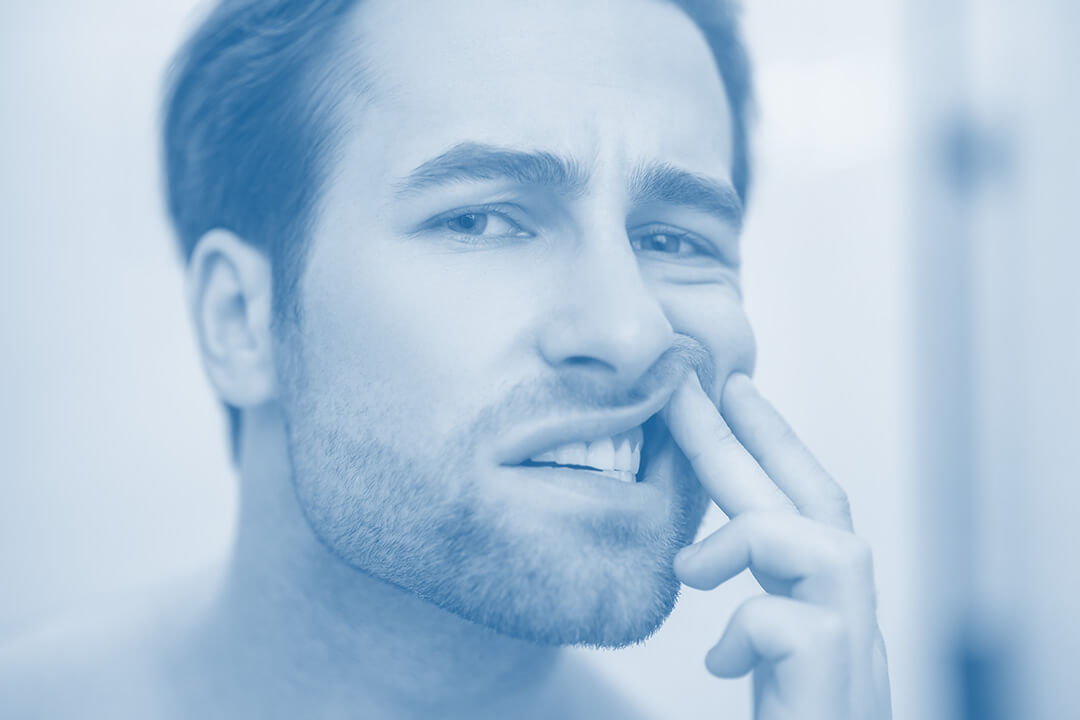
You wake up in the morning and notice it almost immediately: your jaw does not feel relaxed.
Maybe you feel pressure in the jaw joint. Maybe your cheek muscles feel tight. Maybe it hurts when you yawn or bite down. Some people describe it like sore muscles in the face. Others feel pulling pain toward the temples, pressure in the head after waking up or tension in the neck.
And often the same question comes up:
Where is this coming from? I was asleep.
What many people do not realise is that symptoms like jaw pain in the morning often begin during the night, while you are sleeping, completely without noticing it.
When Your Jaw Hurts in the Morning
Jaw pain in the morning is common. And it does not feel the same for everyone.
For some, the day starts with pressure in the jaw joint. Others first notice tension along the cheek muscles or around the temples. Some feel like their teeth have been working all night. Others wake up with headaches or notice they cannot open their mouth comfortably right away.
Especially when symptoms feel stronger in the morning than later in the day, it is worth taking a closer look.
Because very often, nighttime teeth grinding or clenching is behind it.
Why Do People Grind Their Teeth at Night?
Nighttime teeth grinding, also called bruxism, means that the teeth rub against each other or are pressed tightly together during sleep without conscious awareness.
Many people immediately think of the typical grinding sound.
But in reality, many people simply clench their teeth tightly at night without making any noise at all. Sometimes with so much force that the jaw stays under tension for hours without them noticing.
That is exactly why bruxism often goes unnoticed for a long time.
Because you usually do not feel it while sleeping.
The effects often only become noticeable the next morning.
What Can Cause Teeth Grinding at Night?
The causes are not always clear. Often several things come together.
Stress or inner tension can play a role. Emotional strain, a constantly activated nervous system or pressure that builds up unconsciously during daily life can sometimes release through the jaw during sleep.
Bite alignment, uneven contact between the teeth or already tense jaw muscles may also contribute.
What matters is this:
Not everyone who grinds their teeth feels consciously stressed during the day.
And bruxism rarely has just one single cause.
Often it is more complex, which is exactly why it is worth looking more closely.
What Symptoms Can Bruxism Cause?
Most people do not notice the effects during the night. They notice them hours later.
Typical symptoms include jaw pain in the morning, pressure in the jaw, tight facial muscles, headaches after waking up or tension in the neck.
Some people also notice sensitive teeth, pain while chewing or the feeling that the entire jaw feels tired or exhausted.
Over time, nighttime grinding or clenching can also affect the teeth themselves through wear, tiny cracks, pressure on individual teeth or strain on the jaw joints.
How Do I Know If I Grind My Teeth at Night?
Many people do not know for a long time.
Often it only becomes noticeable because symptoms appear in the morning. Or because a partner hears sounds during the night.
Sometimes it is discovered during a dental check-up through visible signs of wear on the teeth or typical tension patterns in the jaw area.
Not every case of bruxism is audible.
Sometimes it is not the sound that reveals it, but how your body feels when you wake up.
What Can Help With Teeth Grinding?
What helps depends on how much strain the jaw is under and what is causing it.
The first important step is often simply recognising that symptoms such as jaw pain in the morning, pressure or tooth sensitivity may be connected to nighttime clenching or grinding.
Many people do not immediately make that connection.
To protect the teeth, a custom-made night guard can often be helpful. It helps protect the tooth structure from further wear and may reduce pressure on the jaw during sleep.
Depending on the situation, it can also be helpful to relax tight muscles specifically and look at the jaw not only from a dental perspective, but more holistically.
At Zahnarztpraxis Cristian Kun, we also use modern light therapy with ATP38 in selected cases as a supportive treatment.
This form of photobiomodulation works with targeted light impulses and may support regeneration, calm tense muscles and gently relieve pressure in the jaw area.
Especially in cases of bruxism, jaw tension or muscular overload, many patients experience this treatment as very soothing, particularly when the pressure is felt not only in the teeth but throughout the jaw.
What makes sense always depends on the individual situation.
The most important step is usually understanding what is causing the strain, and then addressing it specifically.
If Your Jaw Hurts in the Morning, It Is Worth Taking a Closer Look
Jaw pain in the morning is not something you simply have to live with long term.
Often there is more behind it than just “sleeping in the wrong position”.
And the earlier you understand what is putting strain on the jaw, the easier it often is to address it in a targeted way.
At Zahnarztpraxis Cristian Kun, we take the time to look closely at your teeth, your jaw and the possible causes behind the tension.
If you regularly wake up with jaw pain or feel like you may be clenching or grinding your teeth at night, feel free to get in touch with us.